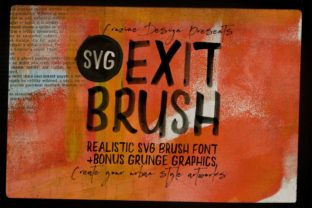
Exit Brush: A Handwritten Font with Authentic Grunge Character
There's a particular quality to hand-lettering that digital fonts often struggle to capture—that slightly imperfect, human touch that makes a design feel genuinely personal. Exit Brush manages to bridge this gap beautifully, offering a handwritten font that carries the energy of actual brushwork combined with a deliberate grunge aesthetic. If you've been searching for a typeface that feels lived-in rather than sterile, this one deserves a closer look.
What sets Exit Brush apart from countless other script fonts on the market is its dual personality. It's not just a clean handwritten style with a few swashes thrown in for decoration. The brush strokes have visible texture, slight irregularities, and a rawness that gives words genuine character. Think of the difference between a perfectly printed sign and something hand-painted on a shop window—the latter carries a story, a mood, an authenticity that connects with people on a different level.
Where Brush Texture Meets Modern Design Needs
The grunge elements woven into Exit Brush aren't accidental or superficial. They're intentional design choices that give the font versatility across projects where you need something that feels real, approachable, and slightly rebellious. This makes it particularly effective for brands and creators who want to stand apart from the polished, corporate aesthetic that dominates so much of today's visual landscape.
Consider how this plays out in practical applications. A coffee roaster looking to establish their packaging could use Exit Brush to convey craftsmanship and small-batch authenticity. A fitness coach building a personal brand might find that the energetic brush strokes communicate drive and intensity without feeling aggressive. A lifestyle blogger designing quote graphics for Instagram would discover that the textured lettering adds visual interest that stops the scroll—something clean sans serif fonts struggle to achieve in crowded feeds.
The color SVG capability is worth highlighting here as well. While many premium fonts stick to standard outlines, Exit Brush includes a version that preserves the rich, multicolored texture of actual brush strokes. This means you can incorporate the font into digital projects where the lettering itself becomes a visual element, not just a container for words. Social media graphics, website headers, and digital invitations all benefit from this kind of built-in visual richness.
Matching This Typeface to Your Creative Projects
Not every project calls for a handwritten font with grunge undertones, and recognizing when to deploy Exit Brush is just as important as having it in your toolkit. It excels in situations where personality matters more than formality. Here's where it tends to shine:
- Logo design for brands targeting younger demographics or positioning themselves as artisanal, creative, or counter-cultural
- Packaging design for products where authenticity and handcrafted appeal influence purchasing decisions—think craft beverages, specialty foods, or handmade goods
- Poster and event graphics where you need headlines that grab attention and convey energy
- Merchandise like t-shirts, tote bags, and stickers where the lettering itself becomes part of the product's appeal
- Invitations and greeting cards for events with a relaxed, creative vibe—art shows, birthday parties, casual weddings
- Music and entertainment branding where gritty, expressive typography sets the right tone
For editorial layouts and blog headers, Exit Brush works well as an accent typeface paired with a more neutral body font. Imagine a magazine spread about street art or a blog post about creative entrepreneurship—using this font for pull quotes or section headers adds visual texture without overwhelming the reading experience.
Practical Considerations for Working with Display Typography
Handwritten and brush fonts occupy a specific niche in the typography world. They're classified as display fonts, meaning they're designed primarily for headlines, titles, and short bursts of text rather than extended paragraphs. Understanding this distinction will save you from a common mistake: setting body copy in a decorative font and wondering why readability suffers.
Exit Brush performs best at larger sizes where its brush texture and character details are fully visible. At small sizes, the grunge elements and stroke variations can become muddy, reducing legibility. A practical approach is to use Exit Brush for your headline or hero text and pair it with a clean sans serif font like Montserrat, Open Sans, or even a simple serif like Lora for supporting copy. This contrast creates visual hierarchy while keeping your design readable and professional.
When testing font pairings, try setting a sample headline in Exit Brush alongside your chosen body font at actual project size. View it on different screens if it's a digital project, or print a test page if it's destined for physical materials. What looks striking at 72 points on your monitor might need adjustment at 24 points on a printed flyer. This kind of real-world testing separates thoughtful design from guesswork.
Building Brand Recognition with Expressive Lettering
Typography plays a surprisingly powerful role in how audiences perceive and remember brands. The fonts you choose become part of your visual identity—sometimes as recognizable as your logo itself. Think about how certain script fonts immediately evoke specific moods or industries. Exit Brush positions itself in that space where creativity meets authenticity, making it a strong candidate for brands that want to feel approachable and genuine rather than corporate and distant.
For small business owners and entrepreneurs building their first brand identity, choosing a typeface like Exit Brush signals something specific to your audience. It says you value individuality. It suggests that there's a real person behind the business, not just a faceless company. This can be particularly powerful for service-based businesses, creative agencies, and direct-to-consumer brands where personal connection drives customer loyalty.
The key is consistency. Once you've selected Exit Brush for your brand typography, use it deliberately and consistently across all touchpoints—your website, social media graphics, email headers, printed materials, and packaging. This repetition builds recognition. Over time, your audience begins to associate that distinctive brush style with your brand, creating a visual shorthand that strengthens your market position.
Getting the Most from Your Font Investment
Before committing to any commercial font for client work or business use, verify the licensing terms carefully. Most premium fonts offer different license levels depending on how you plan to use them—a single user license for personal projects versus an expanded commercial license for merchandise, client work, or widespread distribution. Understanding these terms upfront prevents headaches later and ensures you're using the font legally and ethically.
Take time to explore all the styles and alternates included with Exit Brush. Many premium fonts ship with multiple versions—different weights, stylistic alternates, ligatures, or special characters that give you additional creative flexibility. Experimenting with these options before settling on a final design often reveals possibilities you might otherwise miss. That alternate capital letter or swash variant could be exactly what makes your headline feel complete.
Ultimately, the best typography choices come down to alignment between the font's personality and your project's goals. Exit Brush brings a specific energy—raw, textured, unmistakably human. When that energy matches what you're trying to communicate, the results feel effortless and authentic. When it doesn't, even the most beautifully crafted font will feel out of place. Trust your instincts, test thoroughly, and let the work itself tell you whether the fit is right.