Petra: Handcrafted Typography That Brings Soul to Your Designs
There's something magnetic about a font that doesn't look like it came off a production line. You know the feeling—when you spot a piece of lettering on a wedding invitation, a coffee shop menu, or a boutique brand's packaging, and it just feels human. That warmth, that imperfection, that sense of a real hand holding a real pen or brush—that's exactly what Petra delivers. Born from the concept of hand writing and refined through the application of different brushes, this typeface carries a distinct personality that digital-only fonts simply can't replicate.
What makes Petra stand apart in a sea of available typefaces is its foundation. Each character was initially conceived through hand-lettering, then translated into a usable digital format with careful attention to the organic qualities of brushwork. The result is a font family that feels alive on the page. Strokes vary naturally in weight, curves carry subtle irregularities, and the overall rhythm of the text mimics the cadence of actual handwriting. This isn't a sterile geometric sans serif or a predictable serif font trying to look traditional. It's something genuinely different—a creative font that bridges the gap between artisanal craft and modern design needs.
Why Designers and Brand Builders Are Drawn to Petra
For anyone working in branding, logo design, or visual identity, choosing the right typeface is one of the most consequential decisions you'll make. Typography sets the emotional tone before a single word is read. Petra occupies a fascinating space in this landscape: it's expressive enough to command attention in a logo, yet legible enough to function across longer text applications. That balance is surprisingly rare among display fonts and script fonts.
Think about the brands you gravitate toward. Many of the most memorable ones use typography that feels personal and intentional. A handwritten font like Petra signals authenticity, creativity, and a human touch—qualities that resonate deeply with audiences who are tired of mass-produced, corporate aesthetics. Whether you're building a brand identity for an artisan bakery, a wellness studio, an independent fashion label, or a creative agency, this typeface communicates character without saying a word.
The font ships in both OTF and TTF file formats, which means you can apply it across virtually any design software or printing workflow without compatibility headaches. That practical flexibility matters when you're juggling multiple projects and deadlines.
Exploring the Visual Character of This Typeface
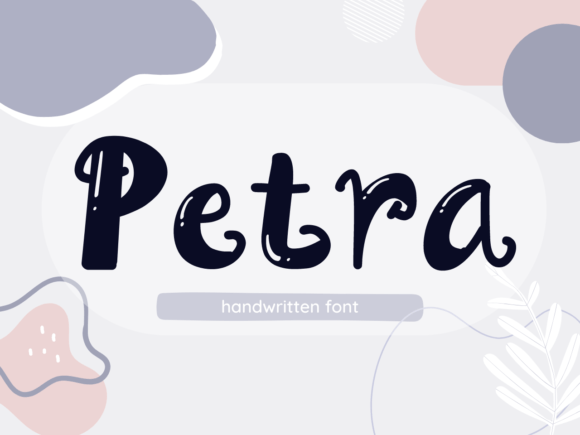
Petra's visual identity is rooted in the interplay between structure and spontaneity. The letterforms maintain enough consistency to ensure readability, but they never feel rigid. You'll notice how certain strokes taper elegantly, how ascenders and descenders have their own personality, and how the overall texture of a paragraph set in Petra feels rich and dimensional rather than flat.
This font design work carries its own uniqueness precisely because it wasn't designed by algorithm. The different brushes used during the conceptual phase—perhaps a flat brush for bold strokes, a round brush for flowing curves, a pointed brush for delicate details—each left their fingerprint on the final letterforms. That layered quality gives designers a lot to work with. You can use Petra at large display sizes where every brushstroke detail shines, or scale it down for subheadings and short text blocks where its warmth adds subtle sophistication.
For those who appreciate modern typography but want something that avoids the homogeneity of trending geometric and neo-grotesque styles, Petra offers a compelling alternative. It sits comfortably alongside premium fonts in any design toolkit while bringing something distinctly its own to the table.
Practical Applications Across Design Projects
The versatility of Petra is one of its strongest selling points. Here's where this typeface genuinely shines in real-world projects:
- Logo design and wordmarks: Petra's handcrafted quality makes logos feel approachable and distinctive. It works beautifully for brands that want to project warmth, creativity, or artisanal values.
- Packaging design: From product labels to box designs, the brush-inspired lettering adds tactile appeal that photographs well for e-commerce listings and catches eyes on retail shelves.
- Social media graphics: Instagram posts, Pinterest pins, Facebook covers, and YouTube thumbnails all benefit from typography that stops the scroll. Petra's organic energy does exactly that.
- Invitations and greeting cards: Wedding cards, birthday invitations, holiday greetings, and event announcements feel elevated and personal when set in a hand-lettered typeface.
- Editorial layouts and blogs: Pull quotes, section headers, and article titles gain visual interest when rendered in a creative font that contrasts with clean body text.
- Website design: Hero sections, call-to-action buttons, and navigation elements can use Petra to inject personality into otherwise minimal layouts.
- Merchandise and print materials: Tote bags, mugs, posters, business cards, and flyers all become more memorable with typography that feels handcrafted rather than generic.
- Digital products: E-book covers, online course graphics, downloadable planners, and worksheet templates benefit from a polished yet personal aesthetic.
- Marketing assets: Email headers, ad creatives, brochure layouts, and presentation decks all become more engaging when typography does more than just convey information—it creates an experience.
Each of these applications leverages a different facet of Petra's personality. The key is matching the font's energy to your project's goals. A wedding invitation calls for elegance and romance, while a social media graphic might benefit from bold, high-contrast usage of the same typeface. Understanding those nuances separates good design from great design.
Font Pairing and Readability Considerations
No typeface exists in isolation. One of the most practical skills any designer or content creator can develop is learning how to pair fonts effectively. Petra, with its expressive brush-script character, works best when balanced with a cleaner counterpart. Consider pairing it with a simple sans serif font for body text—something neutral that won't compete for attention but will provide a solid, readable foundation. The contrast between Petra's organic strokes and a geometric sans serif's precision creates visual tension that feels dynamic and intentional.
For editorial layouts, try using Petra for chapter titles or pull quotes while setting body copy in a classic serif font. That combination nods to traditional publishing while keeping things fresh. On websites, Petra can anchor your hero typography while a web-safe sans serif handles paragraphs and interface elements.
A word on readability: because Petra carries the visual density of brush lettering, it performs best at medium to large sizes. Avoid setting long paragraphs in this typeface—its beauty is in display and short-form applications. For extended reading, always pair it with a typeface optimized for sustained legibility. This isn't a limitation; it's a design decision that respects how typography actually works in practice.
Before committing to Petra for a client project or your own brand, test it in context. Set it alongside your color palette, your imagery, and your other design assets. Print a sample at the size you intend to use. View it on different screens. Typography that looks stunning in isolation sometimes needs subtle adjustments—tracking, kerning, or size changes—to integrate seamlessly into a broader visual system.
Licensing and Working With the Font Files
When you receive the Petra font files, you'll get OTF and TTF formats that are ready to install and use. OTF (OpenType) files typically offer broader feature support and are preferred by most modern design applications, while TTF (TrueType) files provide excellent compatibility across older systems and certain printing workflows. Having both means you're covered regardless of your setup.
Before using any commercial font in client work, merchandise, or widely distributed materials, take a moment to review the licensing terms. Most premium fonts come with clear guidelines about what's permitted—personal use, commercial use, the number of installations, and whether the font can be embedded in digital products like PDFs or apps. Understanding these terms protects both you and the type designer whose craft made the font possible.
Petra's received job file format ensures smooth application for printing, which is particularly valuable if you're producing physical materials like wedding stationery, event posters, or product packaging. Print shops appreciate clean, well-structured font files, and having both OTF and TTF on hand eliminates potential prepress issues.
Bringing It All Together
Typography is one of those design elements that works hardest when it's working quietly. The right typeface doesn't just display words—it shapes perception, triggers emotion, and builds the invisible architecture of visual communication. Petra, with its roots in hand writing and its expression through varied brushwork, offers designers, entrepreneurs, and creators a tool that feels genuinely personal in an increasingly automated landscape.
Whether you're crafting a brand identity from scratch, designing a series of social media templates, preparing wedding invitations for a client, or building out a product packaging system, this font brings a quality that's difficult to manufacture: authenticity. The slight irregularities, the brush-driven energy, the typographic personality that refuses to be generic—these are the details that make people pause, look closer, and remember.
Take some time to experiment with Petra across different contexts. Push it into unexpected pairings. Test it at sizes you wouldn't normally try. The best discoveries in design often come from playful exploration, and a typeface with this much character rewards exactly that kind of creative curiosity.