Why Fun Kids Typeface Feels Like a Playground on Your Screen
There is a specific kind of joy that happens when you see a font that just gets it right. It isn’t about perfect mathematical precision or rigid geometric lines; it is about capturing a feeling. You know the vibe immediately—it is the warmth of a birthday party, the excitement of the first day of school, and the limitless potential of a blank coloring book. When I first opened the file for this particular typeface, that feeling hit me instantly. It wasn't just a collection of letters; it was a personality waiting to be unleashed. For anyone working in creative fields today, finding a tool that bridges the gap between professional polish and genuine, unadulterated happiness is rare, but that is exactly what we have here.
The Psychology of Playful Typography
Why do some fonts feel "serious" and others feel "happy"? It usually comes down to anatomy. In professional typography, we talk a lot about x-heights, ascenders, and descenders. However, in practical design terms, it is really about shapes. Sharp corners and thin, high-contrast strokes tend to signal sophistication, luxury, or severity. Think of a high-end law firm or a fashion magazine. But when you introduce chubby shapes, rounded corners, and soft terminals, you are signaling safety, approachability, and friendliness.
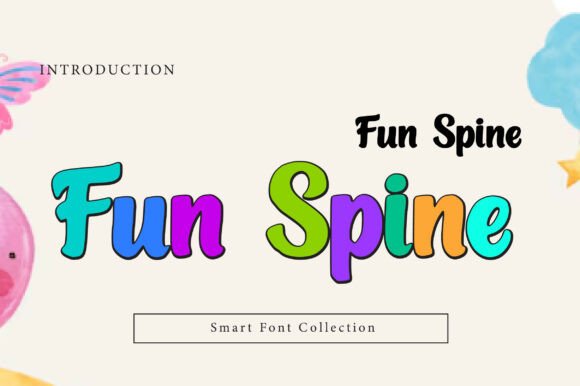
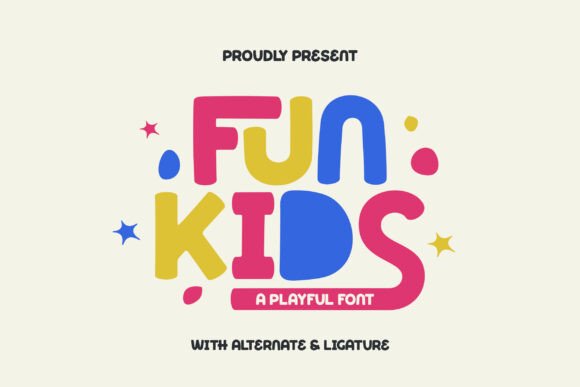
This typeface leans heavily into that "bubbly" aesthetic. The letters feel inflated, almost like balloons before they are twisted into animals. This visual weight creates a sense of sturdiness and reliability, which is crucial when you are designing for children or families. Parents want to feel that a brand is safe and inviting. Kids want to feel that something is exciting and easy to understand. By using a design that mimics the organic, imperfect shapes found in nature or hand-drawn art, you immediately lower the barrier between the viewer and the content. It says, "Come on in, it’s safe to play here."
From Branding to Packaging: Real-World Applications
I often tell clients that typography is the voice of their brand. If your brand were speaking, what would it sound like? For a toy store, a daycare, a pediatric dentist, or a children’s clothing line, you don't want a voice that sounds robotic or overly corporate. You want a voice that sounds warm, energetic, and perhaps a little bit silly. This is where the specific design choices of this font shine.
Let’s look at logo design first. A logo needs to be memorable. Because the letterforms here include whimsical ligatures and alternates, you have the ability to swap out standard letters for more expressive versions. Maybe the tail of the 'y' loops a little differently, or the dot on the 'i' is a perfect circle rather than a square. These small details are what turn a standard wordmark into a mascot. It makes the logo feel custom-designed rather than "off the rack."
Then there is packaging design. Walk down the cereal aisle or the snack aisle at the grocery store. The products aimed at kids use typography that pops. They use bold, readable, and colorful typefaces. This font is perfect for headers on boxes, labels for jars, or tags on merchandise. Because the strokes are thick and the shapes are rounded, it holds up well when printed in bright colors. It doesn't get lost in a busy background pattern; it stands its ground.
But don't limit your thinking to just physical products. In the realm of digital products, this typeface solves a major problem: engagement. If you are creating an app for kids or a learning module, the interface needs to be intuitive. Using a font that feels too "adult" can make the experience feel like homework. Using a typeface that mimics the energy of play helps keep the user engaged. It transforms a math problem into a game and a reading lesson into a story time.
Strategic Pairing and Visual Consistency
One of the biggest mistakes I see in design is the clash of personalities. You might have a beautiful, playful header font, but if you pair it with a stiff, boring body text, the transition can feel jarring. It is like wearing a tuxedo jacket with sweatpants. While this typeface is definitely a display font—meaning it is best used for headlines, titles, and short bursts of text—you need to choose your supporting cast wisely.
When working with a premium font like this, look for a sans serif font for your body copy that shares similar traits. You want something with a generous x-height and open apertures (the openings in letters like 'c' or 'e'). A geometric sans serif often works well here. Avoid pairing it with a highly decorative script font or a handwritten font for the body text, as that will make your layout illegible. The goal is readability.
Consider the hierarchy of your design. If you are building a website for a summer camp, for example, you might use this playful typeface for the main navigation buttons and the hero banner. It grabs attention. Then, for the descriptions of the activities and the registration details, switch to a clean, standard sans serif. This ensures that while the vibe is fun, the information is still conveyed with professional presentation.
Font pairing is also about contrast. If you are designing a poster for a school fundraiser, the contrast between the playful title and the informative details helps guide the viewer's eye. The whimsical nature of the font draws them in, and the clean typography provides the necessary details. This balance is essential for visual consistency across your brand identity.
Maximizing the Toolkit: Alternates and Ligatures
What separates a standard typeface from a creative font asset is often the extras included in the package. This isn't just a set of A-Z characters; it comes packed with alternates and ligatures. For those unfamiliar with the terms, a ligature is when two letters are joined together to form a single unit (like "fi" or "st"), and an alternate is a different stylistic version of a standard letter.
Why does this matter to you as a business owner or designer? It prevents repetition. If you are writing the word "Balloon" and there are two 'o's, a high-quality font will often have different versions of the 'o' so they don't look like copy-pasted clones. It makes the text look more organic, more hand-lettered. This is incredibly valuable for editorial design and social media graphics where you want that authentic, human touch.
When using the OpenType features in your design software (like Adobe Illustrator or Photoshop), take the time to explore these options. You can often access them through the Glyphs panel. Swapping in a whimsical alternate for the first letter of a sentence can act as a drop cap, adding a layer of design sophistication to your blogs or invitations. It shows that you pay attention to the details, which reflects positively on your brand.
Commercial Realities and Licensing
Finally, a note on the business side of design. When you are using a typeface for a client project, a product you are selling, or marketing assets, you must ensure you have the correct license. This is a commercial font, meaning it is intended to be purchased and used in projects that generate revenue. Whether you are putting it on a t-shirt to sell on Etsy, using it in a logo for a client, or printing it on thousands of flyers, the license covers that usage.
Always review the license agreement that comes with your design assets. Understanding the difference between personal use and commercial use is vital for protecting your business and respecting the work of the type designer. In this case, the value provided—through the alternates, the specific stylistic flair, and the commercial viability—makes it a worthwhile investment for anyone serious about their branding.
In the end, design is about communication. It is about finding the right visual language to speak to your audience. For projects that require a touch of innocence, a burst of energy, and a whole lot of heart, this typeface is a robust tool that delivers exactly what it promises: a whole lot of fun.