Proda: Capturing the Golden Hour in Modern Typography
There is a specific quality to the light in late August, when the intense heat of summer begins to soften and the shadows lengthen into the early days of September. It is a time of transition, characterized by a palette of burnished golds, deep teals, and muted terracotta. Capturing this fleeting, sophisticated mood in design requires more than just color theory; it demands a typeface that embodies the same balance of warmth and precision. This is the visual language of Proda. As a high-contrast sans serif, it does not merely display text; it sets a tone of refined elegance, making it an essential tool for creators looking to bridge the gap between casual summer vibes and the structured sophistication of autumn.
The Anatomy of Refined Luxury
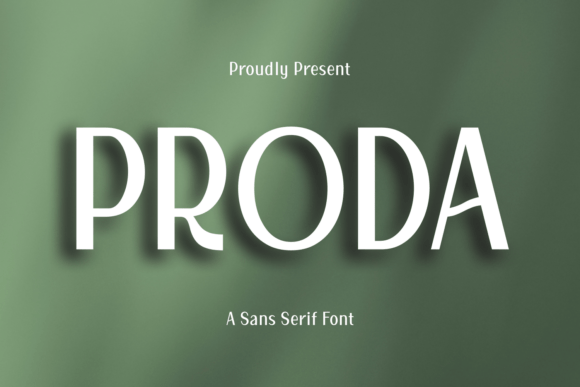
At first glance, the distinction between various sans serif fonts can seem subtle, but the details are what separate a standard utility font from a premium font. Proda belongs firmly in the latter category. Its defining characteristic is the high contrast between its thick and thin strokes. This feature is traditionally associated with serif typefaces, but when applied to a sans serif font, it creates a unique visual tension. The letterforms possess a "stress" that mimics the movement of a calligrapher's pen, yet they remain sans the small projecting strokes (serifs) that finish off a letter in traditional Roman type.
This architectural choice gives Proda a modern, aerodynamic feel. It avoids the cold, sterile rigidity often found in geometric sans serifs. Instead, it offers a rhythmic flow that guides the eye naturally across the page. For the small business owner or entrepreneur, this translates to a brand voice that feels established and high-end without being stuffy. It suggests that the brand pays attention to detail—much like a vintner paying close attention to the harvest season.
Visual Consistency Across the Seasons
One of the most practical challenges in brand identity is maintaining visual consistency across a multitude of platforms. A brand might look great on a desktop website but lose its character on a mobile screen or when printed on a textured paper bag. Because Proda is designed with high legibility in mind, it functions beautifully as a display font for headlines while retaining enough clarity for subheadings and short blocks of body copy.
Imagine a boutique hotel rebranding for the autumn season. Their visual assets need to work on large posters in the lobby, on the website, on social media graphics announcing fall menus, and on the packaging for their new line of artisanal soaps. Using Proda ensures that the "personality" of the brand remains intact. The high contrast ensures visibility at a distance on posters, while the clean sans-serif structure ensures legibility at smaller sizes on digital screens. This versatility is crucial for maintaining a professional presentation that customers learn to trust.
Practical Applications: From Editorial to Merchandise
The versatility of a typeface is measured by how well it adapts to different creative constraints. Proda excels in a variety of scenarios, particularly those requiring a touch of sophistication.
- Logo Design: Because of its distinct high-contrast style, Proda can serve as a standalone logotype. It provides enough visual interest to stand alone without the need for accompanying imagery, making it ideal for minimalist branding.
- Editorial Design: In magazine layouts or blogs, typography needs to create hierarchy. Proda is excellent for pull quotes and section headers, breaking up the monotony of standard body text and adding a luxury feel to the reading experience.
- Digital Products: For creators selling templates, planners, or courses, the font choice defines the perceived value of the product. Using a creative font like Proda suggests a higher value proposition, justifying premium pricing.
- Invitations and Print: For event planners or stationery designers, the transition from summer to autumn often brings weddings and corporate galas. Proda offers a modern alternative to script fonts, providing elegance that is easier to read on formal invitations.
Mastering the Palette: Pairing and Color
A great font rarely works in isolation; it is part of a visual ecosystem. When working with a typeface that has as much personality as Proda, font pairing becomes a critical step in the design process. The goal is to create contrast without conflict.
Since Proda is a high-contrast sans serif, it pairs exceptionally well with neutral, low-contrast text fonts. If you are designing a web design layout, consider pairing a bold weight of Proda for your H1 headers with a standard, legible sans serif (like a Neo-Grotesque) for your body text. This ensures that the headers have the "wow" factor—the aesthetic appeal of the summer to early autumn transition—while the body text remains highly readable for long-form reading.
Regarding color, the "Proda aesthetic" leans into warm neutrals and deep, earthy tones. Instead of using stark black, try setting Proda in a deep charcoal or a rich navy. For background colors, think of parchment, warm sand, or soft cream. These combinations enhance the high-contrast nature of the strokes, making the typography feel tactile and organic, much like the changing leaves.
Technical Considerations for the Modern Creator
While aesthetics are paramount, the technical utility of a font cannot be ignored, especially for those involved in commercial projects. When investing in a commercial font, you are not just buying the letterforms; you are buying the flexibility to use them in various contexts.
Before finalizing a design using Proda, it is wise to test the font across different mediums. How does the thin stroke of the 'e' hold up when printed on uncoated stock versus coated stock? In web design, how does the font render on different operating systems? These are the practical questions that separate amateur design from professional execution.
Furthermore, reviewing the included font styles is essential. A robust family usually includes various weights (Light, Regular, Bold, Black) and perhaps italic variations. Utilizing these weights allows you to create a clear hierarchy in your marketing assets without needing to mix in too many other typefaces. This simplifies the design process and strengthens the brand's visual cohesion.
A Fresh Perspective for Autumn Campaigns
As we move away from the bright, loud aesthetics of summer marketing, there is an opportunity to pivot toward something more introspective and mature. Typography plays a massive role in this psychological shift. A font like Proda signals a change in season—it is bold enough to grab attention but refined enough to whisper rather than shout.
For the small business owner or marketer, this is the time to audit your visual assets. Does your current typography reflect the maturity and elegance of your product? Whether you are updating a packaging design for a holiday release or refreshing your social media graphics for the new quarter, choosing a typeface that embodies modern refinement is a strategic move.
Ultimately, design is about communication. The typefaces we choose tell a story before a single word is read. By incorporating a typeface that balances high-contrast elegance with modern simplicity, you are doing more than just decorating a page; you are crafting an experience that resonates with the sophisticated, shifting rhythms of the season.